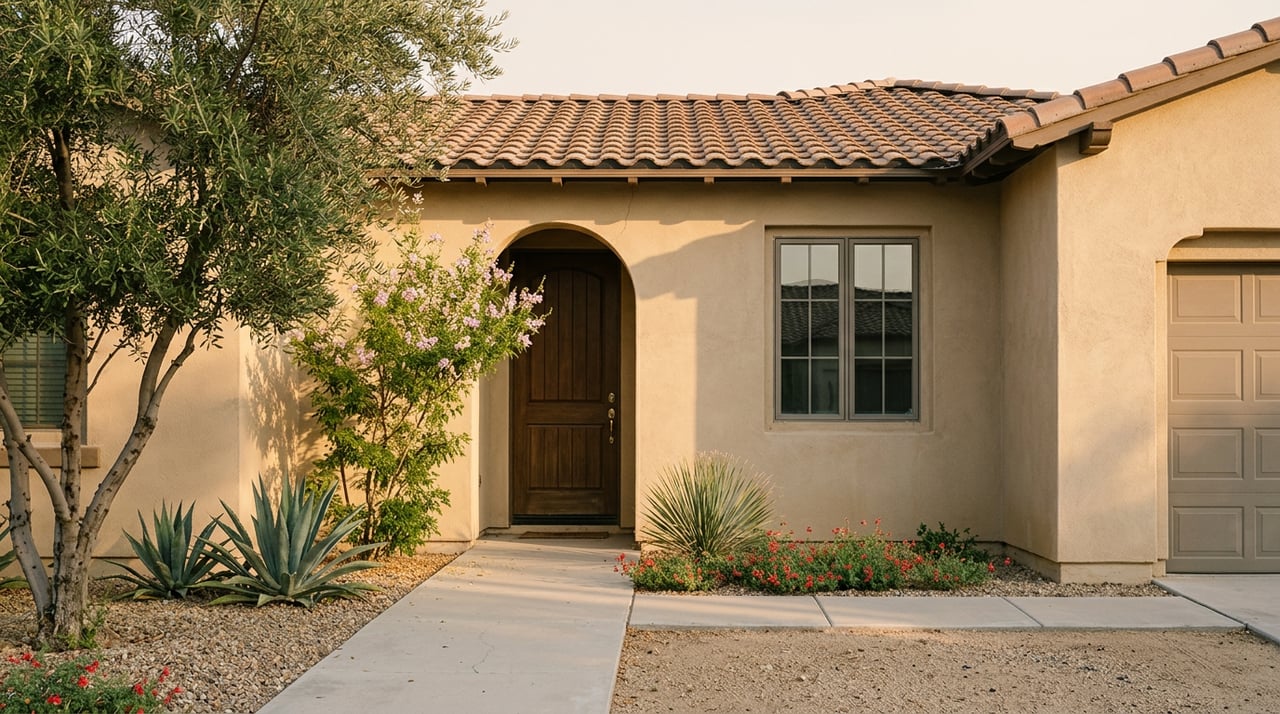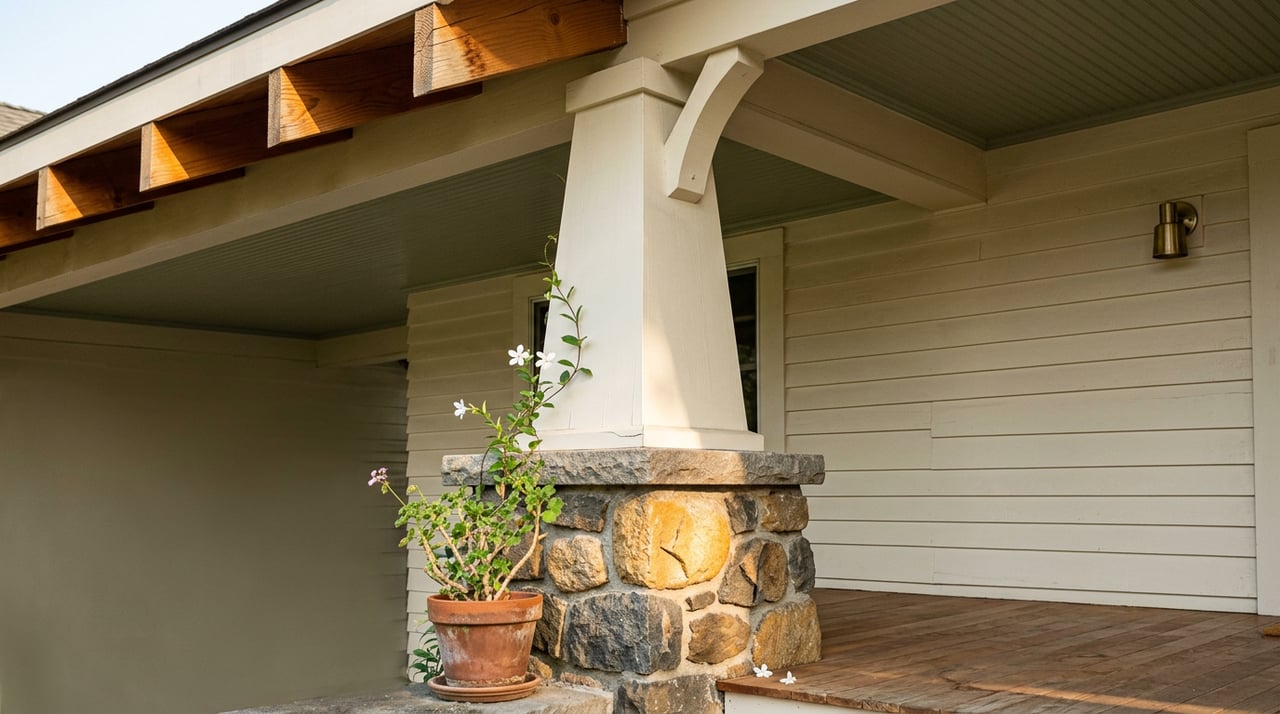
Two Craftsmans sit six doors apart on the same Bungalow Heaven block. Same footprint, similar condition, both asking around $1.35M. One neighbor pays roughly what you would expect at that price. The other pays close to half. Neither is doing anything unusual. They are living out the two halves of a mechanism most buyers never see until the first tax bill arrives.
That mechanism is the Mills Act, layered on top of Pasadena's landmark-district system and California's Proposition 13. Together they turn "what does this home cost" into a question the listing page cannot answer. This is the friction we run into most often in escrow on a designated home, and it is worth learning before you write the offer, not after.
The mechanism, in plain terms
The Mills Act is a California program authorized under Government Code sections 50280 through 50290. Pasadena adopted its local version by Ordinance 6912 in October 2002. A qualifying historic property owner signs a contract with the City agreeing to a 10-year rehabilitation and maintenance plan built around the Secretary of the Interior's Standards for Rehabilitation. In exchange, the Los Angeles County Assessor may reassess the property using a capitalized-income method instead of the Prop 13 base-year value.
That last sentence contains the whole story. Prop 13 anchors your tax base to what the last owner paid, adjusted modestly each year. A Mills Act valuation ignores the sale price and estimates what the home would earn as a rental, capitalized against interest rates and expenses. Those two numbers can be very far apart, and which one is lower depends almost entirely on when the current owner bought.
Where the math flips
Pasadena's own program materials point to a historical average tax reduction of about 51 percent for owners who did save, while warning that results vary widely and are not guaranteed. Long Beach, which runs a comparable program, publishes a working range of 30 to 50 percent for recent buyers and near-zero for owners who have held for more than a decade. The same physics applies here.
If you buy a Pasadena historic home today at roughly the citywide median, which sat at $1,213,480 on Zillow's Home Value Index as of May 31, 2026 and near a $1.2M three-month median on Redfin through May 2026, the County will reassess to your purchase price. That is the moment a Mills Act contract becomes most valuable, because a capitalized-rent calculation on a bungalow typically produces a lower assessed value than a market-price reassessment.
If the seller has been in the home since 1998, the situation inverts. Their Prop 13 base is already so low that a Mills Act valuation would raise their assessment, not lower it. That is why longtime owners often never apply, and why an existing Mills Act contract on a listing is a signal about a more recent purchase, not a random perk.
The takeaway for buyers comparing two similar homes: ask whether a Mills Act contract is already recorded. If it is, it transfers to you at closing along with the maintenance obligations. If it is not, you have a one-shot application window as the new owner, and the calendar matters.
The calendar most buyers don't know exists
Pasadena's 2026 Mills Act Guidelines lay out the timing. Applications are competitive and scored against city priorities including preservation of properties threatened by deterioration, creation or preservation of affordable housing, and demonstrated need for tax reduction to enable preservation. Single-family homes valued over $2.0 million must submit a written statement of special circumstances unless the home is a designated historic monument, a Greene and Greene work, or individually listed on the National Register.
If the contract is executed and recorded by December 31, the reduced assessment typically appears on the following fall tax bill. Miss that window and you carry a full year at the reassessed market value before relief begins. For a buyer closing in July on a $1.35M bungalow, that difference can approach five figures.
The district map is the map that matters
Not every older-looking home qualifies. Eligibility usually starts with local designation, meaning either a City of Pasadena landmark or a contributing resource in a landmark district or National Register district. Pasadena's landmark-district inventory now exceeds 25 districts. Here is how the largest and most active ones sort out.
| District | Approx. properties | Notable feature for buyers |
|---|---|---|
| Bungalow Heaven | ~1,139 | First landmark district (1989), also on the National Register, APA "10 Great Places" 2009 |
| Historic Highlands | ~479 | Second-largest; annual home tour; Arts and Crafts cohesion |
| Garfield Heights | 400+ | Designated 1998; Queen Anne through Spanish Revival |
| Orange Heights–Barnhart | — | First Pasadena neighborhood added to the National Register, 1995 |
| Washington Square | ~250 | Homes built 1910–1940; local landmark district |
| Madison Heights (pending) | — | Petition underway; would become the city's second-largest if approved |
Bungalow Heaven's rough district boundaries run Washington to Orange Grove and Mentor to N. Chester, with the broader neighborhood extending to Lake and Hill. Within any of these districts, homes are further classified as contributing or non-contributing, and that label controls both Mills Act eligibility and what you can change.
What "contributing" actually costs you in a renovation
For a contributing home, most street-visible exterior work requires a Certificate of Appropriateness before a building permit issues. Pasadena's own materials estimate roughly two months of review time for the certificate. Interior work, routine maintenance, and non-visible mechanical upgrades are generally exempt. For buyers planning to move in and immediately open up the front elevation, that timeline is a real constraint on both financing carry and school-year logistics.
The offset is a set of quiet incentives that never show on the listing page. Landmark-district properties can use the State Historical Building Code, an alternative code that lets legacy features like an original porch railing stay in place instead of being brought up to modern height. Additions can request a waiver of the two-car covered parking requirement. City preservation staff provide free consultation on rehab planning. And non-contributing homes inside a district can sometimes be brought into contributing status through work grounded in documentary or physical evidence, unlocking Mills Act eligibility they did not previously have.
The SB 9 wrinkle nobody mentions
California's SB 9 lets many single-family lots split and add units, up to four homes on what used to be one parcel. The state law carves out an exemption for locally designated landmark districts and other historic landmarks. That exemption is why the pending Madison Heights Landmark District matters beyond aesthetics. Homes inside a landmark district are effectively insulated from lot-split redevelopment pressure next door. Homes outside are not. This is a value question buyers should price into two otherwise identical listings on opposite sides of a district boundary.
What to verify before you write an offer on a designated home
- Pull the property's designation status from Pasadena's Historic Property Inventory Database. Confirm landmark, contributing, non-contributing, or undesignated.
- Ask the listing agent whether a Mills Act contract is already recorded. If yes, request the current 10-year work plan and any outstanding items. If no, decide whether you will apply, and confirm you can execute before December 31.
- Model both tax scenarios. A Mills Act contract may or may not lower your bill relative to a fresh Prop 13 reassessment at purchase price. It depends on the capitalized-rent calculation the Assessor will run.
- If you plan visible exterior work, add two months of Certificate of Appropriateness review to your timeline and factor it into financing.
- Confirm district boundaries. A home three lots outside Bungalow Heaven is a different asset than a home three lots inside it, even at the same price per square foot.
A short FAQ
Does a Mills Act contract survive a sale? Yes. Contracts run with the property on a rolling 10-year term and transfer to the new owner along with the maintenance obligations.
Can I paint the house whatever color I want? In a landmark district, most paint color decisions and routine interior work fall outside Certificate of Appropriateness review. Street-visible structural or material changes are the trigger.
Is a designated home harder to sell later? In our experience, well-documented historic status is a positive for the buyer pool that pursues these homes. The friction shows up when records are incomplete, not when they exist.
Working the mechanism with someone who lives here
Designation, contracts, and district lines are not decorative. They set the annual carrying cost of the home and the calendar of what you can change. When we represent a buyer on a Pasadena character property, we treat Mills Act status and the Historic Property Inventory record as diligence items on par with the inspection. When we represent a seller, we make sure that record is clean and legible before the first showing.
If you are weighing a purchase in Bungalow Heaven, Historic Highlands, Garfield Heights, or any of the surrounding landmark districts, The Sabatella Delair Group will walk the specific home with you and model the numbers that actually decide the deal. Work With Us when you are ready to move on the right one.